Suburban properties across Fort Bend, Harris, and Waller counties encounter distinct cockroach pressures driven by the local climate. In communities like Cinco Ranch, Grand Lakes, and Firethorne, the humid corridors…
Suburban properties across Fort Bend, Harris, and Waller counties encounter distinct cockroach pressures driven by the local climate. In communities like Cinco Ranch, Grand Lakes, and Firethorne, the humid corridors along Willow Fork Drainage District Park foster large American cockroaches that thrive in moist landscaping mulch, storm drains, and oak canopy shade. These larger outdoor roaches access homes through unmeshed foundation weep screeds, dryer vents, and worn garage door weatherstripping, particularly when the Texas summer heat drives ground moisture downward. Conversely, German cockroaches are indoor obligate pests that hitchhike into pantries via grocery boxes or used appliances, nesting inside warm refrigerator motor compressors, hollow cabinet hinges, and wall voids behind kitchen sinks. Store-bought total-release aerosol foggers frequently fail because the chemical irritant disperses German roaches deeper into dry interior wall studs rather than eliminating the egg cases, prolonging the infestation and wasting household funds.
Effective defense requires distinguishing between the two primary species to match the biology to the treatment. If an infestation involves 0.5-inch light brown German roaches inside food prep zones, targeted non-repellent gel baits and microencapsulated Insect Growth Regulators (IGRs) work by interrupting the 28-day nymph breeding cycle without generating airborne mists near child play areas or pet bowls. If the problem involves 1.5-inch to 2-inch flying American roaches emerging near baseboards, the protocol shifts toward exterior moisture management, granular barrier placements along the 3-foot perimeter band, and mechanical exclusion of utility penetrations. Newer developments in Elyson, Cane Island, and Silver Ranch often sit on expansive Katy clay soils that crack during extended drought, creating deep subterranean conduits directly beneath concrete foundations where outdoor roach colonies harbor during dry weather.
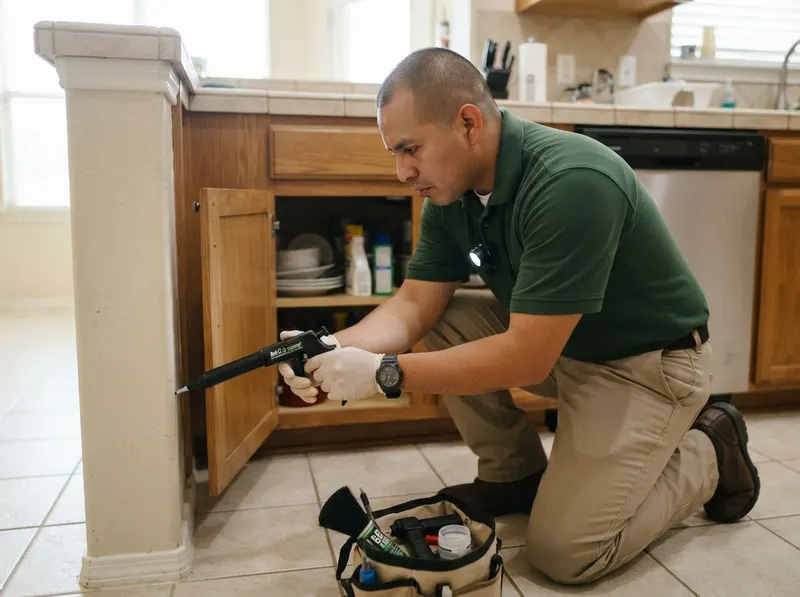
Executing cockroach control follows a four-step process. First, an on-site structural audit checks under-sink pipe collars, dishwashers, and weep holes across the masonry line. Second, technicians place pinpoint gel baits in hidden hinge mortises and apply dry mineral dusts inside wall voids where insects nest out of sight. Third, exterior crawl spaces or foundation perimeters receive a microencapsulated band treatment to prevent outdoor migrations from sewer lines or nearby greenbelts. Fourth, monitoring stations evaluate insect decline over a 14-day follow-up window to confirm total colony collapse, all without demanding mandatory long-term service contracts.
Every job gets a firm, written price after a free on-site visit.
Tell us about your cockroach control job in Katy and we'll send a clear, written quote, usually the same day.
 Brazos Oak Pest Control