Securing professional pest control service in Katy protects residential living spaces from seasonal bayou humidity, active subterranean termites, invasive roaches, and persistent rodent activity. Master-planned foundations across Fort Bend, Harris, and Waller counties experience heavy soil contraction that creates direct sub-slab utility entry points for pests.
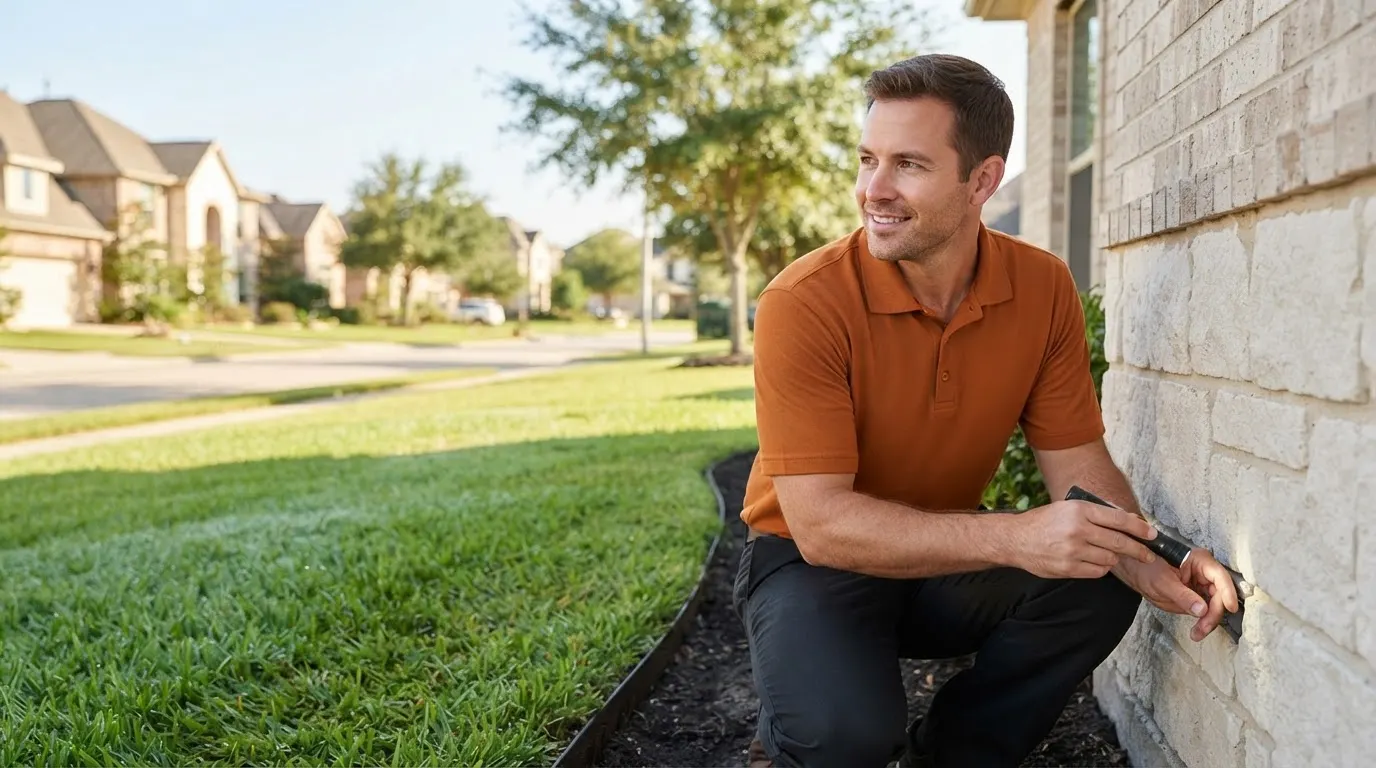
Pest Control Service in Katy is a specialized structural and perimeter defense system designed to eliminate active insect and rodent infestations while sealing building envelopes against Gulf Coast pest pressures.
Every service reflects the same meticulous attention to detail, whether it's a single job or a larger pest control service project across Katy.
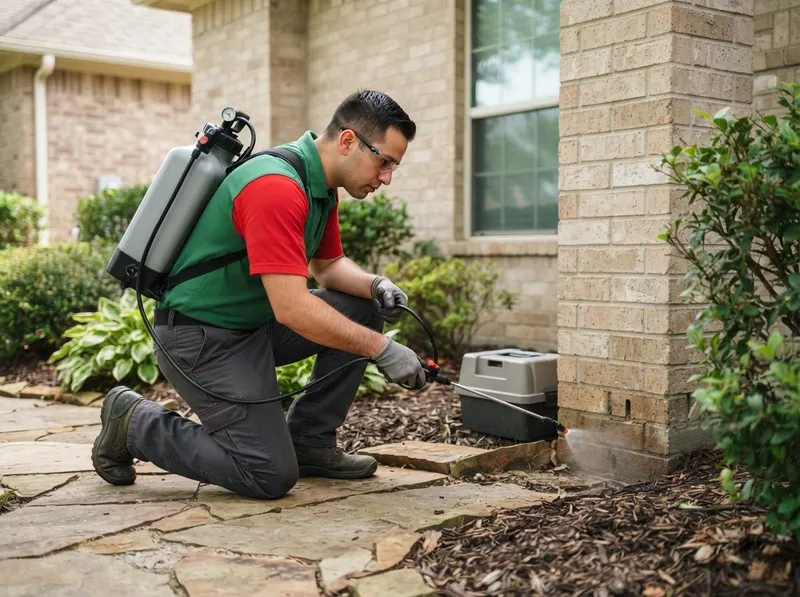
General perimeter pest defense establishes a durable, unbroken exterior shielding band around the immediate structural perimeter of residential homes. Technicians treat a continuous three-foot vertical band upward along exterior brick facades, siding, and stone cladding, paired with a matching three-foot horizontal band sweeping across foundation ground lines, mulch perimeters, concrete walkways, and landscape borders. Application equipment delivers micro-encapsulated formulations designed to resist rapid thermal breakdown under relentless Gulf Coast ultraviolet index levels exceeding 10 and torrential summer downpours. The process inspects and treats weep holes using specialized dusting tools, treats window frame seams, seals utility conduit pipe penetrations, and applies targeted barrier materials under garage door sweeps. This exterior-first approach stops perimeter-invading crawling insects, including American cockroaches, field crickets, silverfish, earwigs, and wood spiders, before they breach exterior door thresholds. By focusing chemistry entirely on exterior entry pathways, interior living rooms, nurseries, kitchens, and pet activity zones remain completely untouched by chemical sprays, satisfying strict domestic safety standards while maintaining active perimeter mortality zones for 90 days.
Get a quote →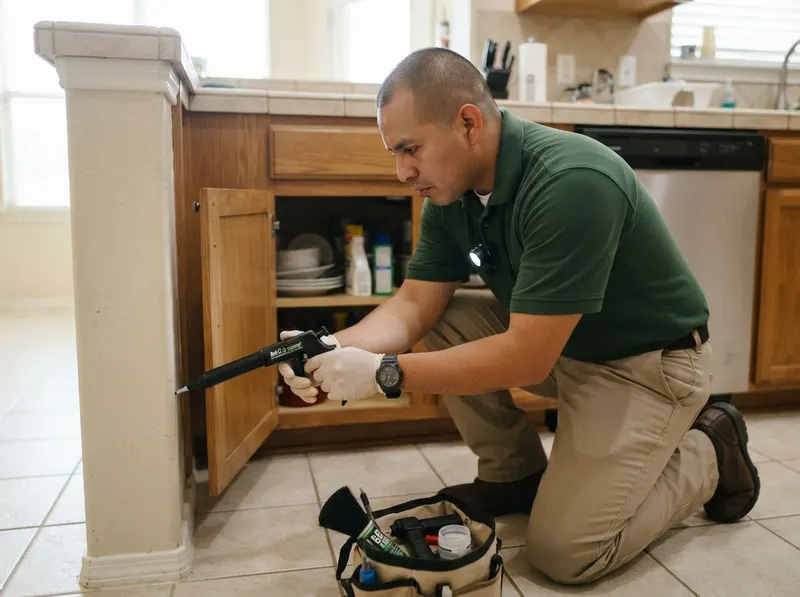
Targeted cockroach control delivers precise eradication protocols customized specifically to the behavior and reproductive cycles of American sewer roaches, oriental roaches, and notoriously resilient German cockroaches. Because German roach females produce egg cases containing up to 48 nymphs every 20 to 30 days, over-the-counter baseboard foggers often trigger population scatter, driving roaches deeper into wall voids and hollow cabinetry. The professional service deploys systematic crack-and-crevice gel bait matrices containing active ingredients like indoxacarb or dinotefuran directly inside structural hinges, appliance motor housings, plumbing pipe chases, and electrical outlet wall voids where roaches harbor and feed. Technicians combine these non-repellent feeding baits with juvenile hormone mimics known as insect growth regulators, which halt nymph maturation and render adult females completely sterile. For large peri-domestic American and smokybrown roaches entering through foundation weep holes and sewer drain traps, technicians treat exterior foundation lines, garage corners, attic floor perimeters, and sub-slab drain cleanout caps. Follow-up diagnostic inspections confirm the total collapse of breeding clusters without leaving noxious chemical odors or broad-surface airborne pesticide residues across residential cooking surfaces or food preparation countertops.
Get a quote →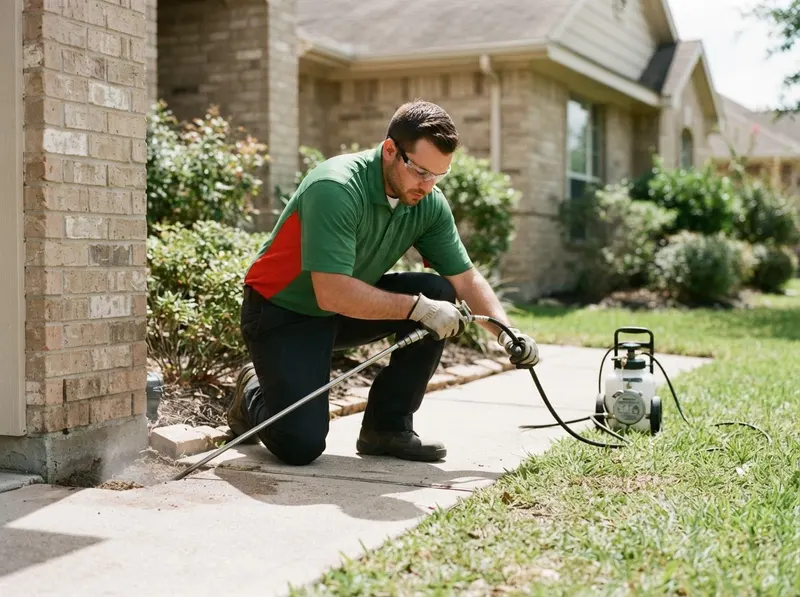
Subterranean termite treatments defend post-tension foundation slabs and structural framing against eastern subterranean and invasive Formosan termite colonies that cause tens of thousands of dollars in hidden timber damage. Because termites require constant soil moisture, worker termites exploit microscopic foundation settling cracks as narrow as 1/32 of an inch, building shelter mud tubes upward through sub-slab plumbing cutouts, bath traps, expansion seams, and exterior weep screeds. Professional technicians utilize advanced non-repellent liquid termiticides containing fipronil or imidacloprid, applying continuous chemical soil barriers along the entire exterior foundation trench. Technicians dig narrow six-inch trenches adjacent to exterior grade walls and inject precise termiticide volumes at calculated rates of four gallons per ten linear feet, ensuring thorough subterranean absorption. Non-repellent chemistry ensures foraging worker termites cannot detect the barrier, causing them to track the active toxicant directly into the primary nest where grooming behavior spreads the compound throughout the colony, eliminating the queen. On sites with extensive concrete flatwork, patios, or masonry porches, technicians drill discrete vertical access holes through concrete slabs to saturate subterranean soil zones before patching drill ports with color-matched structural hydraulic cement. Where non-invasive systems are preferred, tamper-resistant exterior monitoring and baiting stations are installed every ten to fifteen feet around property driplines to intercept subterranean termite colonies before they ever touch structural foundation framing.
Get a quote →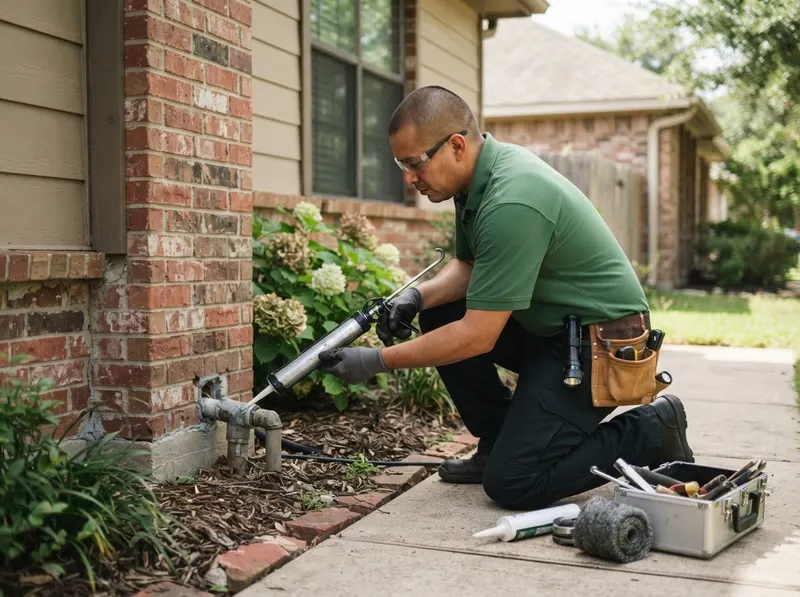
Rodent exclusion and removal eliminates roof rats, Norway rats, and field mice through structural building envelope defense rather than relying on dangerous exterior poison bait boxes that risk secondary poisoning of household pets and neighborhood wildlife. Technicians conduct complete 360-degree roofline, soffit, and foundation assessments, mapping every void greater than one-quarter inch. Technicians seal roof returns, gable vents, ridge vents, crawlspace entries, and air conditioning line chaseways utilizing heavy-gauge galvanized steel hardware cloth, marine-grade silicone adhesives, and copper mesh packing that rodent incisors cannot chew through. Within attic insulation spaces and garage drop ceilings, technicians position industrial mechanical snap traps and covered capture stations along mapped rodent travel runs, checking and resetting traps until all internal population activity reaches zero. Once the attic space is verified free of active rodent movement, technicians extract accumulated fecal matter, sanitize travel paths with bio-enzymatic agents to neutralize pheromone scent markers that attract future rodent populations, and evaluate structural cellulose or fiberglass insulation levels to ensure energy efficiency and hygienic living conditions.
Get a quote →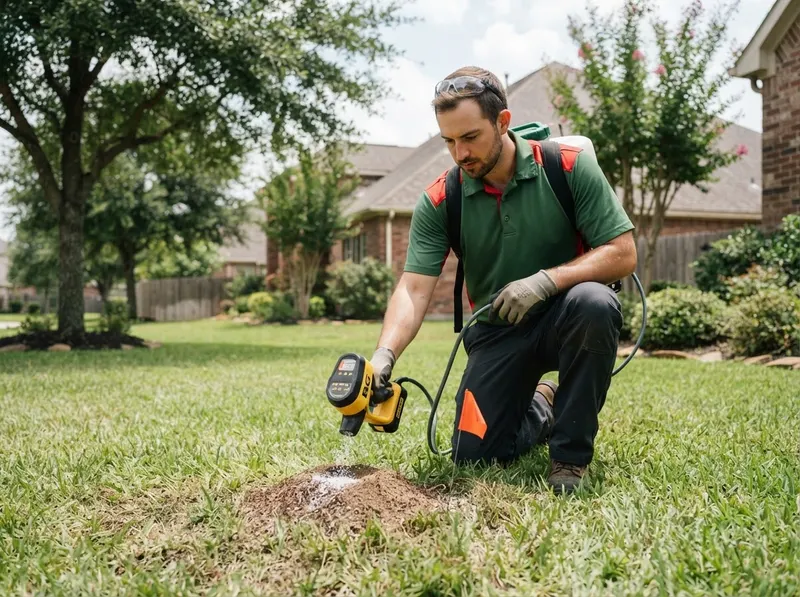
Fire ant yard suppression protects home turf, ornamental landscape beds, pool decking zones, and children's outdoor play spaces from aggressive red imported fire ant colonies that deliver painful stings and trigger dangerous systemic allergic reactions. Rather than applying surface sprays that kill only superficial foraging workers while prompting the subterranean colony to split into multiple satellite mounds, technicians utilize a two-tier agricultural bait and insect development inhibitor methodology. First, broadcast granular bait matrices are applied across the entire turf acreage using calibrated mechanical spreaders during dry weather windows when worker ants actively forage. Worker ants transport the lipid-based micro-granules deep into subterranean galleries to feed the queen and reproductive larvae, completely collapsing subterranean mound hierarchies within two to three weeks. Second, technicians execute direct mound spot drenches or localized injections on mature, visible mounds near high-traffic patio doors, sidewalks, and HVAC equipment pads. This comprehensive protocol establishes an active protective turf barrier lasting six to eight months, insulating residential lawns against seasonal swarm reinvasions across adjacent vacant land or suburban community greenbelts.
Get a quote →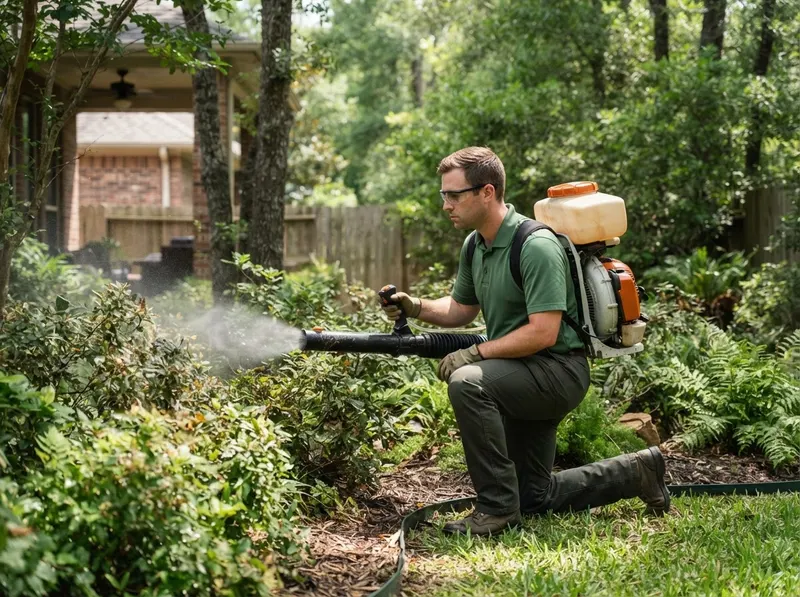
Mosquito reduction treatments dramatically suppress adult biting populations of Aedes albopictus and Culex mosquitoes capable of transmitting West Nile virus, Zika, and encephalitis along humid coastal drainage corridors. Using specialized high-efficiency backpack mist blowers, licensed technicians deliver targeted, ultra-fine droplets of synthetic pyrethroids combined with long-lasting polymeric surfactants to the undersides of dense ornamental foliage, broadleaf shrubs, groundcover beds, fence perimeters, and shaded patio eaves where adult mosquitoes rest during daylight hours. The micro-droplet formulation adheres directly to leaf surfaces, remaining active for 21 to 28 days without washing away under typical lawn irrigation cycles. Concurrently, technicians survey the property for standing water accumulation in catch basins, bird baths, corrugated downspout drain pipes, and low-lying landscape swales, applying non-toxic bacterial larvicides containing Bacillus thuringiensis israelensis or mineral oil surface films. These larvicide applications eliminate immature mosquito wrigglers within 24 hours, preventing emerging adult flights without harming beneficial honeybees, butterflies, family pets, or aquatic backyard features.
Get a quote →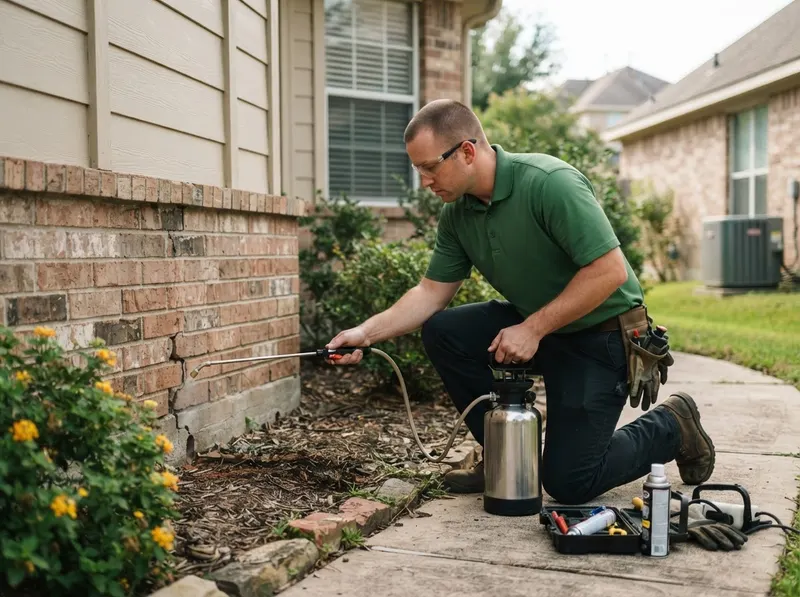
One-time corrective pest remediation provides an intensive, non-contract structural intervention specifically engineered for severe sudden pest emergencies, estate cleanouts, tenant turnovers, or seasonal property purchases requiring immediate sterilization. This comprehensive single-event service targets heavy established infestations of cat fleas, brown dog ticks, carpet beetles, silverfish, or pantry grain weevils that have compromised interior room perimeters. Following an exhaustive visual inspection, technicians apply high-precision residual insecticides coupled with adulticides and specialized growth inhibitors to floor baseboard perimeters, closet corners, under furniture framing, and into sub-floor cracks. For heavy flea or tick infestations, technicians provide clear pre-treatment preparation checklists, coordinate family evacuation windows of two to four hours while treatments dry, and deploy residual materials that neutralize adult pests immediately while preventing unhatched pupae from surviving emergence. A dedicated 14-day post-service follow-up check ensures total population collapse, offering complete domestic remediation without locking homeowners into recurring annual subscription contracts.
Get a quote →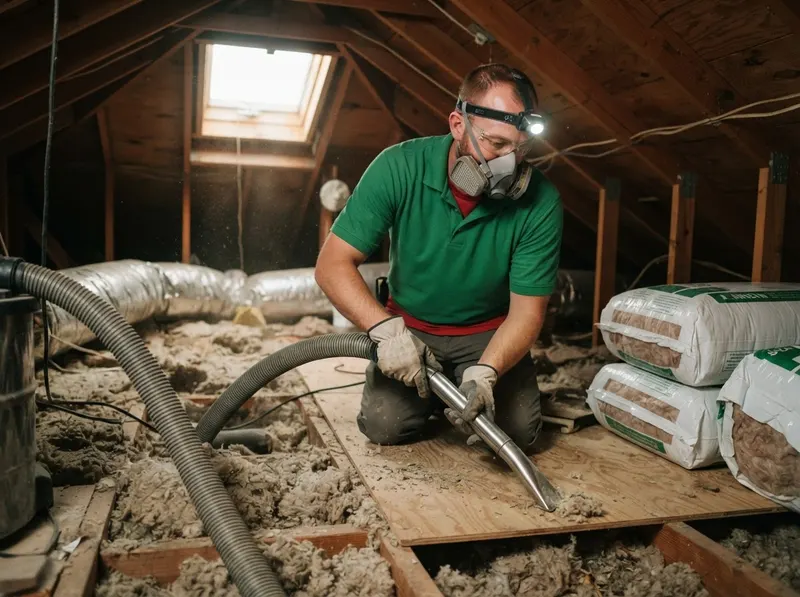
Attic sanitation and insulation restoration repairs structural building envelopes compromised by sustained roof rat, bat, or squirrel harborages. Rodent urine, pheromone trails, and fecal droppings left within blown-in fiberglass or loose-fill cellulose insulation pose significant indoor air quality risks via forced-air HVAC return plenums. Technicians utilize industrial high-vacuum extraction systems situated outside the residence, running large-diameter flexible hoses directly into attic spaces through secondary entryways to safely vacuum out contaminated insulation, nesting debris, and bio-waste without dispersing airborne particulates into living areas below. Following waste removal, attic joists, top plates, drywall backings, and HVAC duct runs receive thorough micro-mist fogging using hospital-grade, EPA-registered bio-enzymatic sanitizers that eliminate bacterial pathogens, fungal spores, and organic odor molecules. Once sanitized and fully dried, technicians install fresh, pest-resistant borate-treated thermal cellulose or high-efficiency fiberglass batting up to recommended R-38 thermal values, stabilizing home cooling efficiency during intense Texas summers while deterring future subterranean and attic-dwelling pests from re-establishing nests.
Get a quote →You get a firm, itemized quote for your pest control service before any work begins, no surprises, no pressure.
Careful prep, tidy work, and a full cleanup when we are done. We treat your home and belongings like our own.
The same trusted, background-checked team from the first call to the final check.
Selecting the right pest control service depends directly on target pest biology, structural construction age, foundation footprint, and neighborhood drainage topography across the Katy prairie. When homeowners encounter German cockroaches or roof rats inside kitchen pantry cabinetry, behind dishwasher kick plates, or within second-story attic joists, they should choose an intensive two-stage corrective cleanout. That protocol combines non-repellent liquid matrices, enzymatic flushing agents, insect growth regulators, and mechanical snap traps directly at harborage zones.
The trade-off is higher initial preparation requirements, including clearing under-sink storage areas and organizing localized follow-up visits within 14 days, rather than relying on a rapid single-visit exterior spray. When homeowners occupy a newer master-planned build in master-planned communities like Elyson, Cane Island, or Firethorne, an ongoing exterior quarterly barrier program represents the most practical structural choice. That program maintains a continuous band across exterior perimeter brick lines, weep screeds, soffit vents, and window thresholds.
The trade-off is that exterior perimeter maintenance preserves interior family living zones without chemical exposure inside children's bedrooms or pet play areas, but it does not resolve pre-existing wood-destroying subterranean insect colonies already concealed behind interior drywall studs. For older or established brick-and-mortar homes in neighborhoods such as Cinco Ranch, Grand Lakes, or Pine Mill Ranch adjacent to Willow Fork bayou waterways, selecting a comprehensive subterranean termite liquid barrier or integrated bait monitoring system is the correct technical decision. The trade-off involves higher upfront capital expenditure compared to seasonal perimeter surface sprays, yet it provides verifiable five-year subterranean protection against aggressive Formosan and eastern subterranean termite colonies that enter structural timber through micro-fractures in shifting post-tension slab foundations.
Every project gets a firm, written price after a free on-site visit. Ranges below for orientation.
Tell us about your pest control service job and we'll send a clear, written quote, usually the same day. Or just call and talk to a real Katy pro.
(346) 827-0056
Katy's dense Beaumont clay soil foundation shifts aggressively between heavy spring downpours and intense summer droughts, creating visible foundation gaps along brick weep screeds and utility line conduits. Properties bordering regional water corridors like the Willow Fork Drainage District, Mary Jo Peckham Park, and Paul D. Rushing Park experience persistent subterranean pest pressures from smokybrown roaches and Formosan termites seeking refuge indoors. Structural treatments across neighborhoods like Cane Island and Firethorne require specialized non-leaching perimeter compounds that withstand rapid storm runoff without washing away into municipal bayou tributaries. The junction of Interstate 10 and the Grand Parkway Highway 99 experiences continuous construction disturbance that displaces established rodent and insect populations into adjacent master-planned subdivisions. Older tree canopies in historic Heritage Meadows and mature landscape foliage near Katy Heritage Park and the MKT Railroad Depot and Museum harbor heavy roof rat populations that utilize overhanging oak and pine branches to bypass chemical ground barriers and access structural attic vents. Furthermore, community retention ponds and irrigation systems throughout Fort Bend County, Harris County, and Waller County maintain elevated ambient humidity levels that accelerate pesticide breakdown, making exact quarterly perimeter replenishment essential for long-term domestic security.
Free estimates for Katy & the surrounding area.
 Brazos Oak Pest Control